2
Followers
16
Following
The Archaeology of Writing
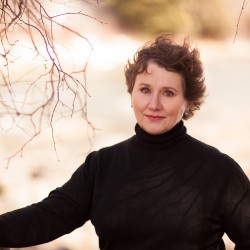
All over the world, but not of it. Hemisphere-hopping wife, mother, author, angler, and seminary graduate. Represented by Books & Such Literary Agency.
Currently reading

The Luminaries

America's Great Game: The CIA’s Secret Arabists and the Shaping of the Modern Middle East
Empty Mansions: The Mysterious Life of Huguette Clark and the Spending of a Great American Fortune

Blood and Beauty
The Last Camellia


Habits of the House
 I'm a big fan of British period fiction. My love affair started at about 13, evolving from America's Henry James and Edith Wharton. It continues, four decades later.
Habits of the House is an enjoyable book. It's not demanding, and you'll not learn anything. I actually read it on the deck, in a loungechair, under an umbrella. It's that kind of summer read.
I think the author, a well-respected Brit with numerous awards, included just enough bawdiness to make the book marketable; just enough royalty to make it appear legit; just enough descriptions of food, jewels and fashion to make her work pleasurable to a female demographic. In other words, she wrote the piece like a pro.
As a well-traveled American, though, I take exception to her stereotypical depiction of American travelers of the period. Although she positions the heroine as the illegitimate child of a former burlesque dancer and a cattle baron, and these characters make for a colorful story, the ill-mannered American with a heart of gold is kind of tiresome, and it's about time to put the cliche to bed.
Habits of the House is great for time at the beach (or on the deck). There are two forthcoming books in the series, and unless it's a slow fiction day on my bookshelves, I probably won't invest in them.
Z: A Novel of Zelda Fitzgerald
 Like so many of my generation, I've heard and read about the Fitzgerald/Hemingway/Stein/Murphey years in Paris and on the coast of France. Z: A Novel of Zelda Fitzgerald, although a work of fiction, was a breath of fresh air regarding this period of excess, escape, and artistic richness.
Much of what Ms. Fowler wrote rang true. Her depiction of the era's limitations of women, particularly in the South, was dead on. I've actually wondered if southern-belle Zelda's mental illness was in part a ruse anchored in and triggered by F. Scott's instability, ego, and alcoholism.
I think this is a valuable addition to other works about this era when Americans could live abroad like kings and queens. When the literary and art worlds fed off each other to flourish. When men ruled the roost, and most women made their way in the world by any means other than brains. When successful men's wives were easily disposable.
If you've read Hemingway and Fitzgerald, and if you've explored this heady environment through works such as The Paris Wife and beyond, I think you'll enjoy Ms. Fowler's exploration of Zelda's psyche.
Recommended.
The Hit
 Although I think this is one of Baldacci's weaker offerings, I enjoyed it. This is one of those times I'd like to be able to give a half star; if I could, I'd rate it 3.5 stars.
I particularly like the way he is developing a relationship between his protagonist (Will Robie) and a teenage girl. (Yes, that could get creepy, but it doesn't.) I think it's hard to humanize a spy and hit man (although Silva does a stellar job with Alon), and Baldacci is adding another facet to Robie that is appealing, and to which I can relate as a mother.
This fast-paced thriller is pretty much what you'd expect from Baldacci and any other perennial resident of the NYTimes bestseller list. Recommneded for a long airplane ride, or a day at the pool.
The Aleppo Codex: A True Story of Obsession, Faith, and the Pursuit of an Ancient Bible
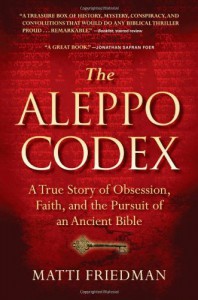 I am a history geek and seminary graduate, and I really enjoyed The Aleppo Codex. It's well-researched, well-written, and enlightening. It provides an excellent historic context for understanding today's Middle Eastern conflict, as well as reveals aspects of the Jewish diaspora and state's early government that help me comprehend tensions in the region by adding layers of detail.
 I've read extensively about the formation of the State of Israel—both contemporary and historic accounts—and this book brings missing puzzle pieces to my understanding of the Middle East as it exists now.
Highly recommended.
The Yard
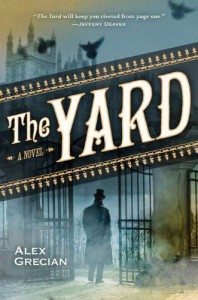 It's been at least 15 years since I've abandoned a book, but I just crested page 185, and am bailing.
 I was attracted to the book because I enjoy Sherlock Holmes, and spinoffs from that literary franchise, so expected to enjoy a novel set in the early days of Scotland Yard. I am interested in the book's era (Victorian London just after Jack the Ripper's carnage).
I am abandoning the book for the following reasons.
1) I'm halfway through, and still have trouble distinguishing the author's main characters (a group of detectives). This confusion is unusual for me, and think he needs to provide more defining characteristics, or should have eliminated some of his cast.
2) The author's villian is abducting young boys, but by page 185, there's nothing specific about why. (I can imagine why and don't want abundant specifics, but drawing out the revelation slows down the story, and the implications are luridly distracting.)
3) While I read suspense (Silva, Baldacci, Leon), some of the details in this book are a little too graphic for me.
So perhaps this book was a mismatch in the first place, but I caution you to read about it carefully before investing in it.
The Prisoner of Heaven: A Novel
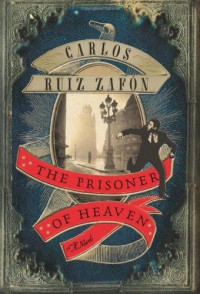 This is my second Zafon book in as many months, and I have found a new voice I love.
 I know little about the Spanish war of the last century, so the setting of his novels is new to me. In The Prisoner of Heaven, Zafon continues to educate me about the conflict's atrocities while furthering the storyline of The Shadow of the Wind. Again, his characterizations are rich and ring true. The twists and turns of the storyline could skirt the improbable, but he depicts this world so well I find periodic "stretches" easy to ignore.
The young Daniel, who comes of age in The Shadow of the Wind, walks as a confident man through The Prisoner of Heaven. But this novel story belongs to his friend Fermin, who relives a life he'd rather forget, and which ties him far more tightly to Daniel than I could have imagined. The men's friendship, Daniel's maturing relationship with his wife and father, and the casts' evolution from war to peace is a dramatic and enjoyable journey. And as with The Shadow of the Wind, Zafon's beautiful use of language and humor (particularly in Fermin's voice) lightens otherwise heavy and sad scenes.
I am delighted to have discovered Zafon's work. I recommend it highly.
The Golden Egg (Commissario Guido Brunetti)
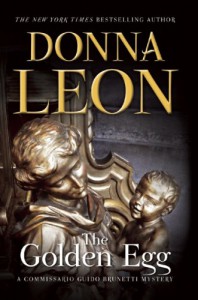 I'm a Donna Leon fan, believing she's at the top of her game and one of the finest suspense writers of my time. I begin each novel with slight hesitation, hoping she's not tiring of Inspector Brunetti and his family, or his work in the floating city.
 This latest manuscript is one of her best. It also is one of the most difficult to read for reasons I won't share in depth (no spoilers from me!) here, but having to do with the ideally near-sacred maternal bond. Her storyline, always complex, is REALLY interwoven in The Golden Egg, but believeably so. The realistic relationship between Brunetti and his heiress wife, Paola, remains consistent with my experience of a long-married couple. And the back-and-forth bickering of the two children always makes me smile.
I particularly appreciate her treatment of Venice. I have a love/hate relationship with the city, particularly with a rising tide, but do not know an author who depicts it more accurately, or with more nuance. (Of course, she should convey its essence well since she's a long-time resident.)
I heartily recommend The Golden Egg, and will hold my breath as I await her next installment.
What Darkness Brings: A Sebastian St. Cyr Mystery
 I am impressed with C.S. Harris's ability to continue to weave a tale with characters she's explored thoroughly. I recently read a book by another author in a similar position (multiple books about the same characters), and Ms. Harris's work remains fresh and interesting to me, whereas the other author's does not now. Part of this reaction is Ms. Harris's believeable storyline, and obvious knowledge of the historic period.
I do see that she might be grasping a little; this novel contains more profanity and more crassness. I don't think she depicts her male protagonist (Sebastian St. Cyr) as sympathetically as she has in previous work. However, this change may be the result of intentional character development.
She also gets more into the vernacular of the period, which I find interesting but that might turn off other readers. I think this is a more technical manuscript in terms of vocabulary, but it's easy to follow and engaging nonetheless.
I enjoyed it, and look forward to the next novel in the series.
Where the Light Falls
 This first novel is somewhere between three and four stars for me. Merging two favorite topics — art and Paris — Ms. Keenum's knowledge is accurate, and I am comfortable with her presentation of the city in the late 1800s. She crafts a believable "envelope" for her story. (Reality is a dealbreaker if lacking.)
Her characters are engaging, although the cast is large and sometimes confusing. I understand she needs an ensemble cast for this story, but believe she could have pared the characters without harming the flow. Her portrayal of immigrants, and the exit of American artists to Paris at this time, is consistent with what I've read elsewhere, and by focusing on females, she presents a slightly different "take" on the usual depictions. Her development of France's eastern coast was lovely, although lacking in the senses I mention in the following paragraph, but could have been more enjoyable. Her depiction of laudanum addiction is sensitive and well-used.
I would have liked more descriptions of Paris's sensory impact. I know it has both good and bad smells, and is full of color and sound regardless of the month. From other reading, I know this also was true in the late 1800s. If I can fault Ms. Keenum anything, it would be she didn't include enough of all senses in her writing, and Paris is, as Hemingway said, "...a moveable feast" which merits use of every sense.
SO if you enjoy art, and all things French (except the attitude of the ocassional taxi driver), this might be an enjoyable diversion worth hanging on through a slightly slow beginning.
I'm looking forward to reading more of her work, and congratulate her on her first release.
The Shadow of the Wind by Ruiz Zafon Summary & Study Gudie
 I read this on the flight to South America — and couldn't put it down. S. Zafon's characterizations are rich, and make me thankful I'm not coming of age again! The storyline, while complex, is chock full of surprising twists and turns (depicted realistically). I enjoy the structure of his writing, recognizing an artistic way with words that doesn't overwhelm his intent, but enhances it.
 It has been a very long time since I've read a "new-to-me" author I've enjoyed this much, and I heartily recommend this book if you're looking for an original, beautifully colored suspense. I look forward to reading more of Zafon's work.
The Art Forger: A Novel
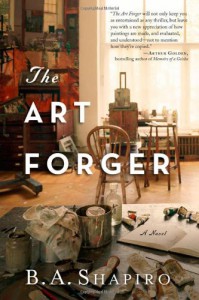 This book has one of the most uniques "voices" I've read in a long time. Ms. Shapiro does an excellent job of characterization, which made me care about Claire and her friends. She nailed the artistic world, and her use of flashback chapters wasn't distracting. I appreciate her intelligent perspective, and enjoyed the academic approach to art, history, and the painting process. She has a light hand with sex and profanity, which I also appreciate.
I hope to read more of her work. (And no, I dont' know her, so this isn't a planted recommendation.)
Excellent job.